
Background / Problem
I built this out of frustration. I was trying to work out which parts actually fit my own car, and at the same time I was talking with someone from Autobarn who said one of their biggest pain points was customers not knowing what would fit. Staff were relying on memory, catalogues and guesswork. I wanted to see if a lightweight AI layer could collapse that whole “does this fit?” dance into one interaction: take a photo, add your car, get a clear answer.
Approach
I gave myself a day and used what I knew. A Jotform captured the user’s details: a photo of the part, basic car info and a bit of context. That fed into a Google Sheet, which triggered a Google Apps Script I hacked together with help from ChatGPT.
The script grabbed the form data and image, sent it to the OpenAI API, and asked it to:
- Check whether the part was likely to fit the described vehicle.
- Rate DIY difficulty (beginner / intermediate / expert).
- List required tools and key installation steps.
- Suggest recommended products with links to a retailer.
- Add safety notes, extra tips and relevant YouTube videos.
It then wrapped everything into a single email and fired it back to the user, usually in under a minute. At the time, Apps Script + email was just the fastest way to get the idea out of my head and into a working prototype.
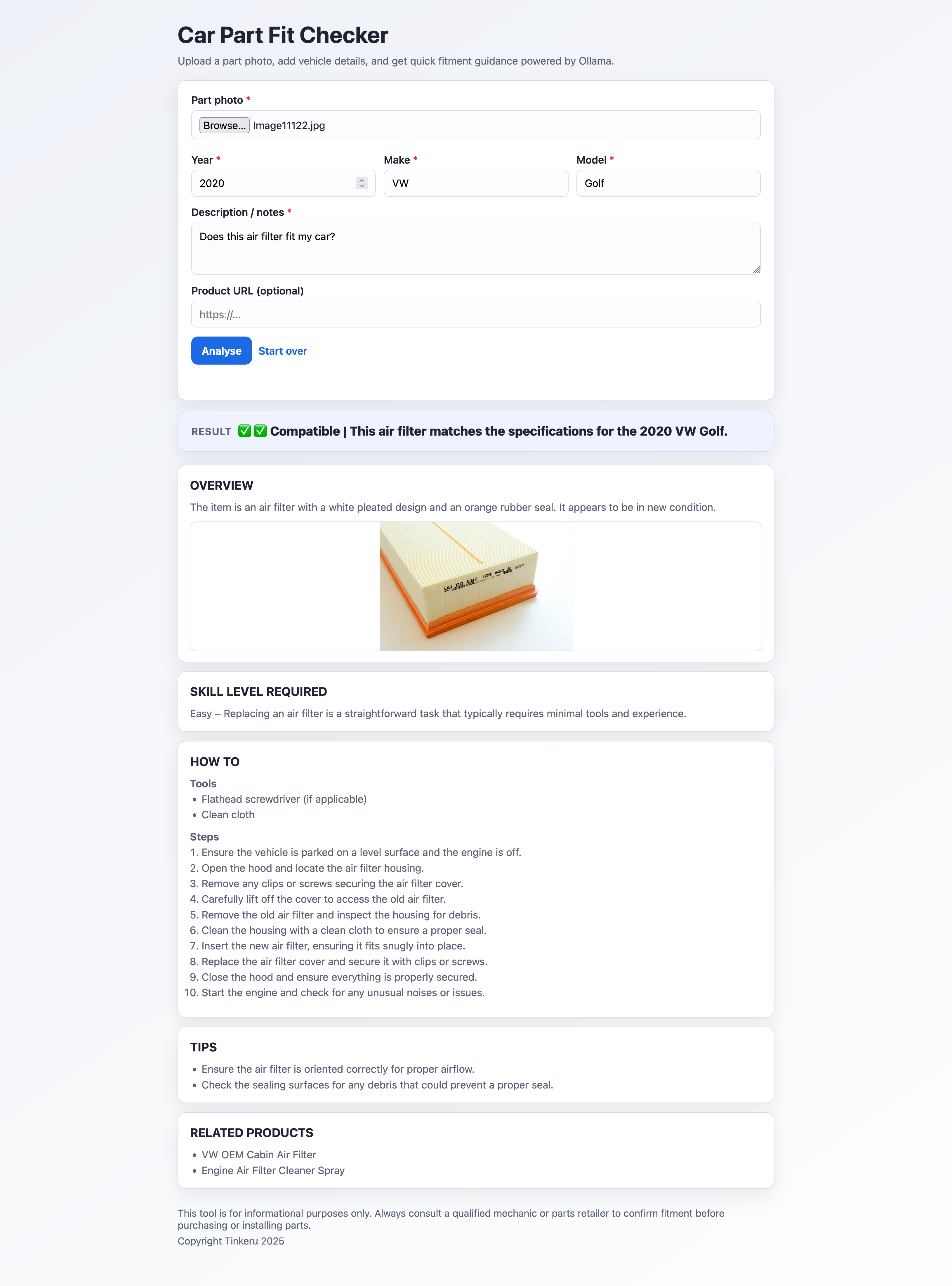
Later, I rebuilt the core logic using Docker and Ollama. Same idea, different stack: a local model, a small service, and a cleaner path to running everything in front of the user instead of in their inbox. The second build only took a couple of hours, mostly because the thinking and structure were already there.
Outcome / What I learned
The thing actually worked. I took it into auto parts stores and tested it in the wild: a customer could snap a part on the shelf, enter their car, and get a fit check plus install guidance almost instantly, without needing to hunt down the one staff member who “knows that stuff”.
For me, it was also a good reality check: building the prototype was the easy bit. The harder part was finding people, getting them to try it, and understanding whether it solved the problem in a way they cared about. It made it very clear that marketing and growth aren’t “somebody else’s job” — they’re core skills if you want your work to actually touch real users.
It proved that AI can genuinely reduce friction in this kind of decision, that boring glue tools (forms, Sheets, Apps Script, an API) are more than enough for a meaningful prototype, and that you don’t need the “right” stack to learn something useful. Constraint and speed mattered more than elegance; once the idea was proven, switching to a Docker + Ollama setup was just another iteration.
My role
I designed the flow, set up the form and spreadsheet, wrote and iterated the Apps Script with ChatGPT’s help, integrated the OpenAI API, and shaped the email output. It was very much “learn as I go”, but that was the point: get a real, testable thing in front of people and see if it’s worth taking further.
Prototype walkthrough
Quick demo of the end-to-end flow.
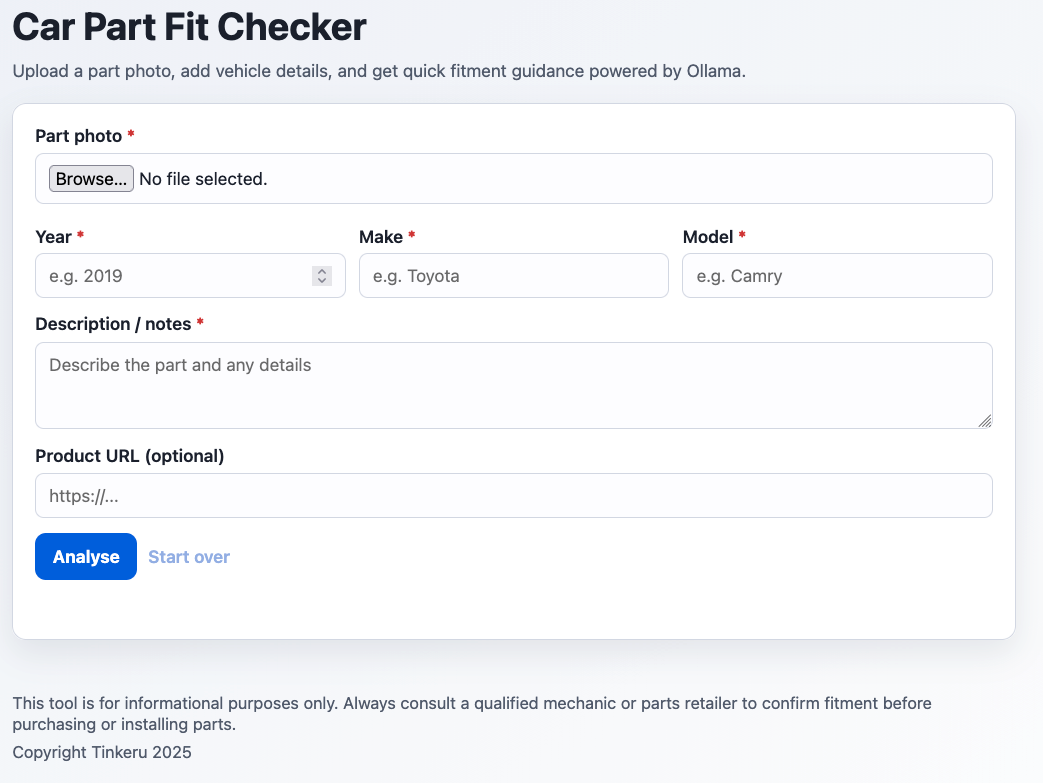
Empty state
Initial screen people see before uploading.
Results view
Example of the output returned to users.